Excavation services
Demolition Services in the Catskills & Hudson Valley
Most demolition services around here mean careful jobs close to things that have to survive: an old garage or barn, a collapsed shed, a porch, or foundation walls left from a house long gone. Justin takes the structure down, sorts the debris, and leaves ground that's ready to build on or seed.
How a Demolition Job Actually Goes
Before anything comes down, a few things have to happen. Power, gas, water and phone service to the building need to be shut off and disconnected by the companies that provide them. Older buildings may need an asbestos inspection first, since old siding, flooring and pipe insulation can contain it, and it can't just go in a dumpster. Most towns also want a demolition permit. Justin will talk through what your building likely needs on the site walk.
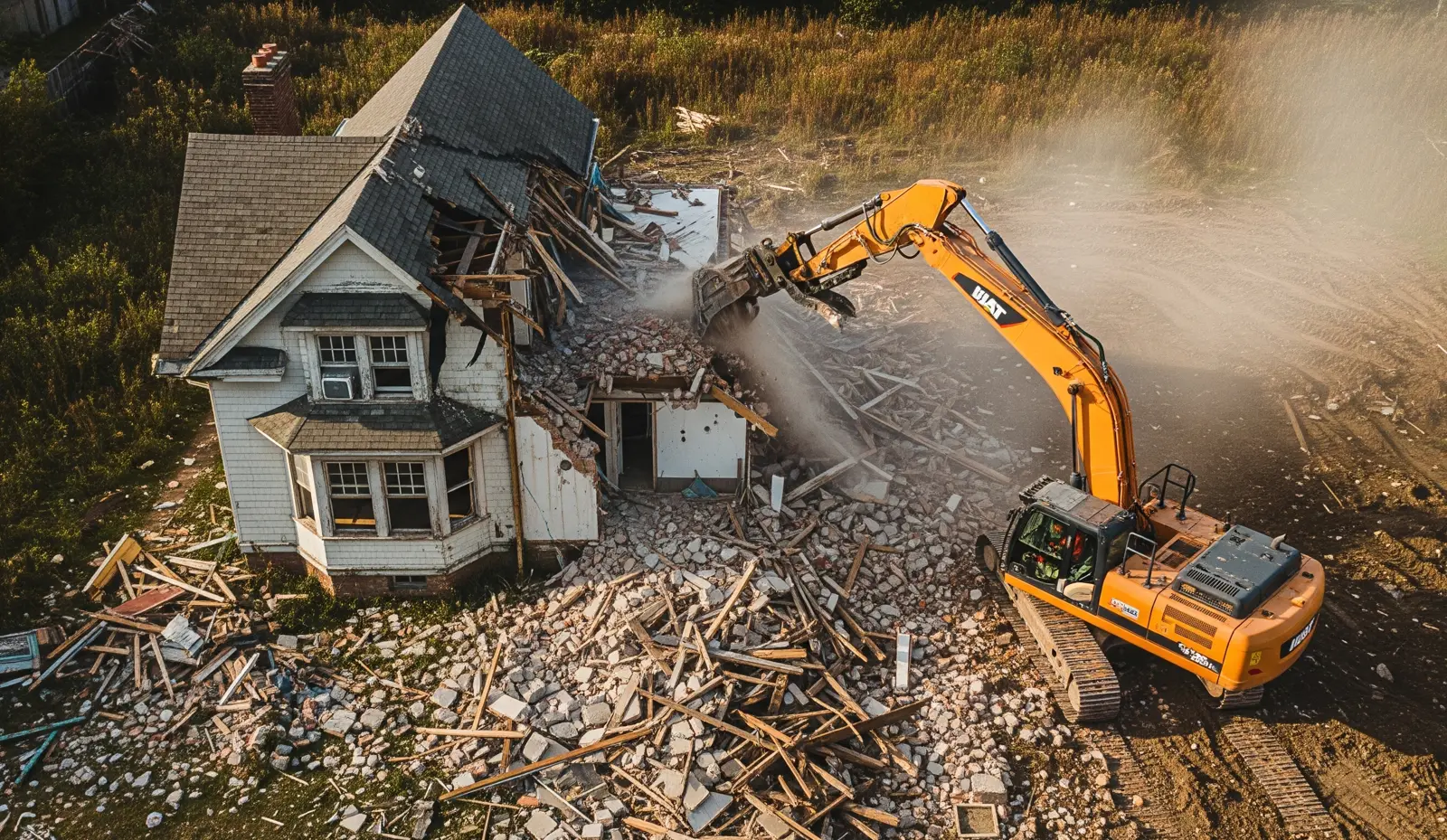
Then the machine goes to work, pulling the structure in on itself instead of out toward anything you want to keep. Debris gets sorted as it comes down: metal in one pile, wood in another, concrete and block in another. That matters because disposal is priced by material, and mixed debris is the most expensive kind to get rid of. Last comes the part people forget: getting the foundation and slab out, filling the hole, and grading the site.
Foundations, Slabs and What Hides Underground
The building is often the easy part. Old foundations are where the time goes. The fieldstone foundations under older Catskills houses and barns come apart stone by stone, and concrete walls and slabs have to be broken up. Clean concrete and stone can sometimes be reused as fill on site if it's placed properly, which cuts down on trucking.
Precision counts here. One customer had old foundation walls that had been neglected for 20 years, and Justin cleaned them out in less than a day.
Then there's what you can't see. Old farmsteads and camps can have buried oil tanks, abandoned wells, cisterns, dry wells and old septic tanks. An old septic tank should be pumped, then crushed or removed and filled, not left to collapse someday under a lawn mower. If the new house is going on sewer, see sewer and septic excavation.
What Does the Cost of Demolition Depend On?
Mostly size, materials and disposal. A wood shed with no foundation comes down quickly. A block garage with a slab, or a barn on a stone foundation, takes longer and produces heavier debris. Disposal fees, trucking distance, asbestos work if it's needed, and how close the building sits to things that must survive all move the price. Justin gives you a straight price after seeing it.
Access matters too. A barn in an open field is simple. A garage wedged between a house and a steep bank, or a camp at the end of a narrow wooded road, means smaller bites and more careful work.
Preparing for Demolition Services, and What Not to Do
Empty the building of anything you want to keep, plus household trash, paint, chemicals, tires and fuel, which all need separate disposal. Get the service disconnects scheduled, tell Justin where the septic and well are, and decide what comes next: new construction, a garden, a lawn. That decision sets how the hole gets filled and graded.
A few mistakes to avoid. Don't pull a building down yourself with a truck and a chain; walls fall in directions you didn't plan. Don't bury mixed demolition debris on site. Wood rots, voids collapse, and you're left with a sinkhole that can cause trouble when you sell. And don't leave a foundation hole open over a season, because it fills with water and becomes a hazard. Once the site is clear, grading and landscape prep or site excavation for the next build can start right away.
Word around town
From customers who called Justin.
Justin's done several jobs for us, each one terrific. He just cleaned out some old foundation walls that had been neglected for 20 years, and did a precision job in less than a day. He's smart and solves problems if they arise. As a plus, he has a sense of humor!
Genuine guy who is responsive and responsible. Justin was reasonable when my project changed scope a few times. Felt like he cared about leaving me with quality work and a positive experience. Handled septic removal/crushing, and hook-up to city sewer with extensive site grading.
Straight answers
Demolition: common questions
Can you take down just part of a building, like a porch or addition?
Often, yes. Partial demolition takes more care, because the part that stays has to be protected and closed up. Justin will look at how the pieces are tied together before giving you a price.
Do I need a permit to tear down a shed or garage?
Many towns require a demolition permit even for outbuildings, and some want proof that utilities have been disconnected. Rules vary, so check with your town's building department before the work is scheduled.
What happens to the old foundation?
It's usually broken out and hauled away, though clean concrete and stone can sometimes be reused as fill on site. If you're building again in the same spot, the old foundation almost always has to come out completely.
Do you offer demolition services near me?
Yes, in ten towns across Greene, Ulster and Columbia counties, all within about 45 minutes of Palenville. Call (518) 947-4330 or use the quote form, and he'll come walk the building for a free estimate.
Often paired with
Related work.
- Site Prep
Site Excavation & Prep
Foundation digs, footings, pier holes and backfill for homes and additions.
- Grading
Grading & Landscape Prep
Rough and fine grading, compacted fill and topsoil ready for lawn, patio or beds.
- Septic
Sewer & Septic
Sewer laterals, city hookups, septic tanks and leach fields. 24/7 for backups.
No charge to look
Get a free quote.
Tell Justin what you've got going on. He'll call you back, come out and walk it, and give you a straight price.
(518) 947-4330 jmhoeing@yahoo.com- Free estimates on every job
- Licensed & insured
- Underground utilities marked before we dig. Justin handles it.
- Emergency calls answered 24/7